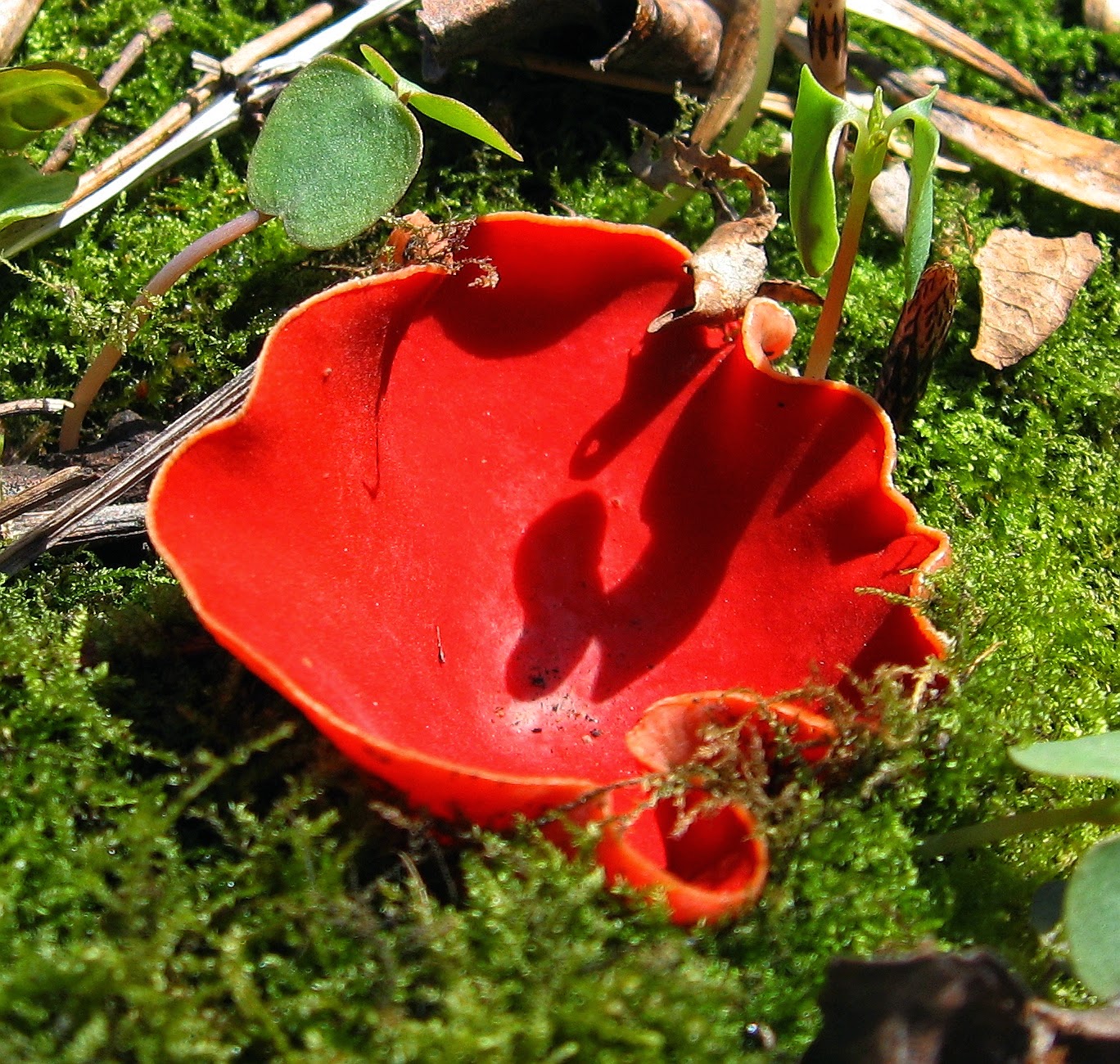
According to Michael Kuo at MushroomExpert.Com, the cup fungus Sarcoscypha coccinea is indigenous to the Pacific Northwest. The striking red woodland floor fungus found in the east in early spring, commonly known as Scarlet Elfcup, Scarlet Elfcap, or Scarlet Cup, is apt to be Sarcoscypha dudleyi or Sarcoscypha austriaca.
The differences aren't visible to the naked eye and a microscopic examination is needed to separate the species. And despite its brilliant color the Scarlet Elfcup is sometimes not visible to the naked eye on a macro scale, as it often grows under drifts of last autumn's dead leaves and easy to miss.


The usual first butterflies of spring have been flying for the past couple of weeks – Mourning Cloaks, Eastern Commas and Spring Azures. May 5th marked my first sighting of a Henry's Elfin (Callophrys henrici) for 2014, and the Eastern Pine Elfins and Juniper Hairstreaks should be out and about any day soon (maybe they already are and I've overlooked them).

Order juxtaposed against chaos, and another sign of spring ... the graceful green spirals of fiddleheads poking their way through the monotonous brown of the random forest floor litter. These look like Northern Lady Fern (Athyrium filix-femina), this makes sense as late last summer this fern was growing along the woodland stream where the fiddleheads were photographed.

Fiddleheads of the Sensitive Fern.

Ostrich Fern rhizome and fiddleheads.

These shapely unfolding fronds may belong to a Cinnamon Fern, but the world of ferns and other non-flowering plants is new to me and I'm still learning, so I'm not sure. I'll keep tabs on them and see what develops over the couple few weeks.


